





Insulating Rim Joists With Spray Foam: A Complete Guide

If your floors feel cold in January, some rooms never seem to hold their temperature, and there is a draft you can never quite track down, the culprit is often hiding in a spot most homeowners never see. Insulating rim joists with spray foam closes one of the largest and most overlooked air leaks in a typical Pine Belt home. It is a small strip of framing, but pound for pound it does more to tighten your house than almost any other upgrade. Here is exactly why it matters and how our crew handles it across south Mississippi.
- The rim joist (also called the band joist) forms the perimeter of the floor framing above the sill plate, where the floor system meets the exterior wall or foundation. It is a notorious source of air leaks and heat loss.
- Closed-cell spray foam can seal and insulate the rim joist in a single step, helping reduce drafts and moisture-laden air movement while adding a continuous layer of insulation that fiberglass alone cannot provide.
- Properly air-sealed and insulated rim joists can help improve floor temperatures, reduce drafts, and make indoor temperatures more consistent.
- It is a fast, high-impact project, usually finished in a few hours from inside the crawl space or basement.
What Is a Rim Joist, and Why Does It Leak So Much Air?
Picture the wooden box that frames the underside of your floor. The rim joist, or band joist, is the vertical perimeter member that closes off the ends of the floor joists and typically sits above the sill plate at the top of the foundation. Your floor joists butt into or connect with it, and the whole floor system rests over the foundation framing below. In the raised pier and crawl-space homes that are so common around Hattiesburg, Petal, and the rest of the Pine Belt, that band of lumber sits just above the foundation sill, with nothing but a thin board between your living space and the outdoor air.
Here is the problem: builders almost never seal that area well. The standard approach for decades was to jam a scrap of fiberglass batt into each rim joist cavity and call it done. Fiberglass can provide useful thermal resistance, but fiberglass batts by themselves are not an air barrier. Outdoor air, humidity, dust, and even insects can still move through unsealed gaps around the assembly. On a crawl-space home, the rim joist is riddled with tiny gaps where the sill plate meets the foundation, where the subfloor meets the band board, and around every joist end.
The reason this small area punches so far above its weight comes down to physics. Warm air rises and escapes through the upper part of your house, which pulls outdoor air in through the lowest, leakiest points to replace it. That is the stack effect, and your rim joists are one of the lowest, leakiest points in the entire building envelope. Sealing them is one of the most effective air-sealing moves recommended by the ENERGY STAR for cutting drafts and unwanted air leakage.
The Benefits of Insulating Rim Joists With Spray Foam
When we seal this strip with closed-cell foam, several good things happen at once. The foam expands, hardens, and locks down in places fiberglass simply cannot. Here is what that delivers for a Mississippi home.
A tighter, better-sealed building envelope
Because the rim joist sits at the bottom of the stack effect, sealing it reduces a common pathway for unwanted outdoor air to enter the home. Your system no longer has to keep up with as much hot, humid outdoor air sneaking in at floor level, so indoor temperatures can hold more evenly from room to room and season to season. It is a small area, but sealing it along with your attic and crawl space is one of the most effective ways to make the whole house feel tighter, calmer, and more consistent.
Warm floors and steadier comfort
Cold floors in winter can often be caused or worsened by air leakage and inadequate insulation around the rim joist, although other factors such as floor insulation and HVAC performance can also play a role. Once the band joist is sealed, less cold outdoor air can leak into the floor assembly. Rooms may hold their temperature longer, the air feels less drafty, and the house simply feels tighter and quieter.
Moisture and condensation control
This is the benefit that matters most in our humid climate, and it is why we reach for closed-cell foam here. A bare or poorly insulated rim joist can become cold enough in winter for moisture in indoor air to condense on the surface when it falls below the dew point. Over time that moisture can contribute to mold and rot if the assembly remains damp.
Closed-cell foam limits air movement and has relatively low vapor permeance, helping reduce the risk of air-driven condensation when it is installed at the appropriate thickness over dry, sound framing. It does not replace repairs for roof, plumbing, drainage, or other bulk-water leaks. If you are weighing materials, our guide to open cell versus closed cell spray foam walks through why density and vapor resistance matter so much for this job.
A barrier against pests and outside air
Those same rim joist gaps that let air through can also provide entry points for insects, spiders, and rodents looking for a way into the crawl space. A continuous layer of cured foam can close many of those small openings and reduce the dust and pollen carried indoors by air leakage.
However, spray foam is not termite protection and does not replace professional pest control. Because termites are a significant concern in Mississippi, the installation should also avoid unnecessarily interfering with termite inspection access.

Our Rim Joist Spray Foam Process, Step by Step
One of the reasons this project is so satisfying is how quickly it goes when it is done right. Here is how our crew approaches a typical rim joist job in the Pine Belt.
- Inspect and prep the area We pull out any old, sagging fiberglass batts, clear cobwebs and debris, and check the band board for moisture, soft spots, or signs of pests. If we find rot or active leaks, those get addressed first, because foam should never be sprayed over a problem. The framing should be dry and sound before it is covered.
- Knock down the obvious gaps Larger penetrations and any spots where light shows through get attention so the foam has a clean surface to bond to. Good prep is what separates a seal that lasts decades from one that fails early. We also maintain required clearances around flues and other heat-producing components and use the appropriate approved sealing materials where standard spray foam is not suitable.
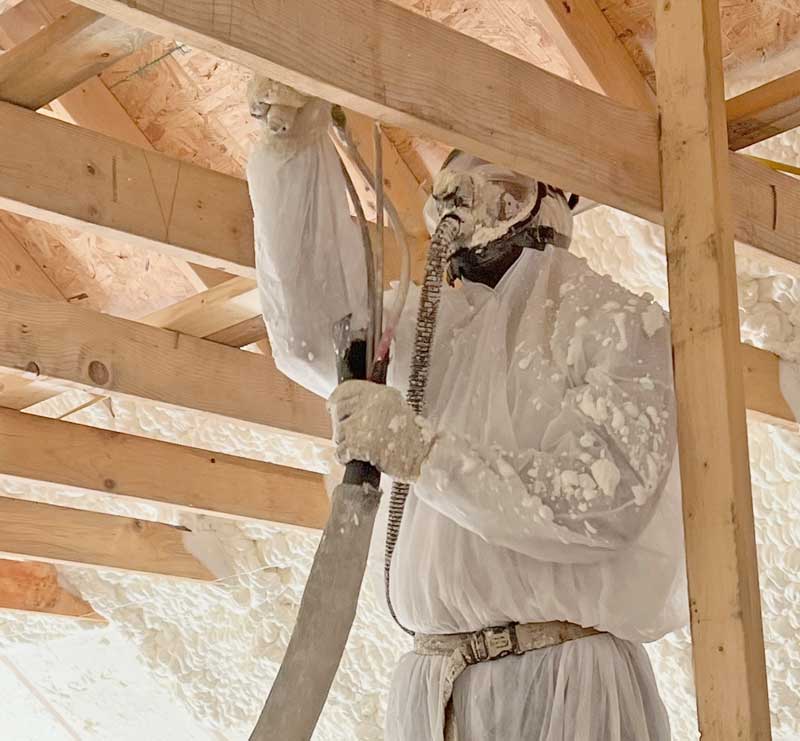
- Spray closed-cell foam to the right thickness We apply closed-cell polyurethane evenly across the band board and the top of the sill, often around two inches when the selected foam product, required R-value, and applicable code call for that thickness. This provides continuous insulation and air sealing and can also provide significant vapor resistance depending on the product and installed thickness. The foam expands to fill every seam and joist pocket.
- Trim, inspect, and clean up Once it cures, we trim any high spots, confirm full coverage at every joist bay, and haul out our gear. Most rim joist jobs are done in a single visit.
Open cell or closed cell for a rim joist?
For rim joists in our climate, closed-cell is generally our preferred option rather than the only technically acceptable choice. It is denser, insulates more effectively per inch, and has lower vapor permeance, which is useful where cavity depth is limited and condensation control is a priority. Open-cell foam has its place for deep attic rafter bays and interior sound control, but it is more vapor permeable. The right material still depends on the specific assembly, moisture conditions, and project requirements.
Why this is a job worth handing to a pro
Spray foam is created by mixing two chemicals at an exact ratio, temperature, and pressure. Get any of those wrong and the foam can stay tacky, off-gas longer than it should, or never reach its full density and insulating performance. That precision is why professional rigs are basically mobile chemistry labs, and it is a big part of what spray foam equipment costs a contractor to run.
Crawling a tight, dirty crawl space with a foam gun is also dusty, awkward work that goes much faster and safer with the right protective gear and experience. Ventilation, curing, and re-entry times should follow the specific spray foam manufacturer’s instructions rather than relying on a universal timeline. Our professional spray foam insulation services cover the inspection, the foam, and the cleanup so you never have to suit up.
Not sure if your rim joists are the problem?
Book a free inspection and we will check the crawl space and tell you in plain English.
Frequently Asked Questions
How much does it cost to insulate rim joists?
Because the rim joist is a relatively small area, it is one of the more affordable spray foam projects, especially when bundled with crawl space or attic work. The exact number depends on the size of your home, how accessible the crawl space is, and the condition of the existing framing. The best way to get a real figure is a free on-site estimate, where we measure the actual linear footage and check for any prep work the area needs first.
Can I just use fiberglass batts in the rim joist instead?
You can, and most homes already have them there, but batts are the reason the area underperforms in the first place. Fiberglass does not stop air movement, so cold and humid air still passes right through. Worse, in our climate the batt can trap moisture against a cold band board and quietly feed mold. That is why insulating rim joists with spray foam is the upgrade we recommend over simply replacing the old batts.
Will closed-cell foam cause moisture problems in the wood?
It is the opposite. Closed-cell foam keeps the band board warm and seals out humid air, which is what prevents the condensation that rots framing. The only time moisture is a concern is if there is an existing leak or active water intrusion, which is exactly why our first step is always an inspection before any foam goes up.
I already insulated my attic. Do I still need to do the rim joists?
Yes, and here is why: the attic stops heat from escaping at the top, but the stack effect pulls replacement air in at the bottom, right through the rim joists. Sealing only the top of a leaky house is like closing the upstairs windows while the basement door stays open. Addressing both ends is how you get the full comfort and draft control.
Is the spray foam safe once it is installed?
Yes. Cured spray foam is inert and stable, usually fully cured within about 24 hours of installation. During application our crew uses proper ventilation and protective equipment, and once the foam has set it sits quietly in your crawl space doing its job for the life of the home.
Ready to seal the leak under your floors?
Book your free home inspection and we will tell you exactly what your rim joists and crawl space need, with no pressure and no obligation.